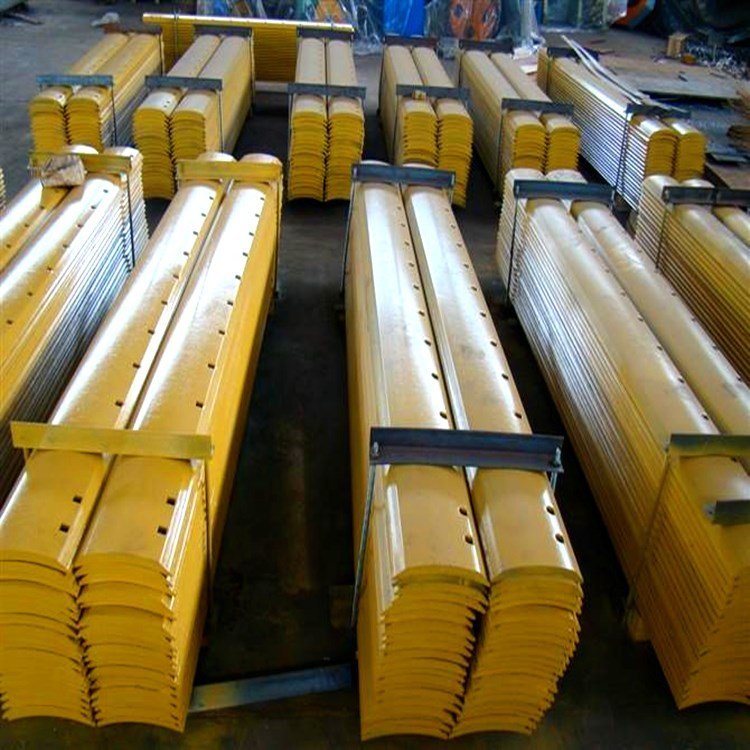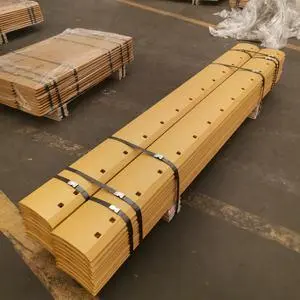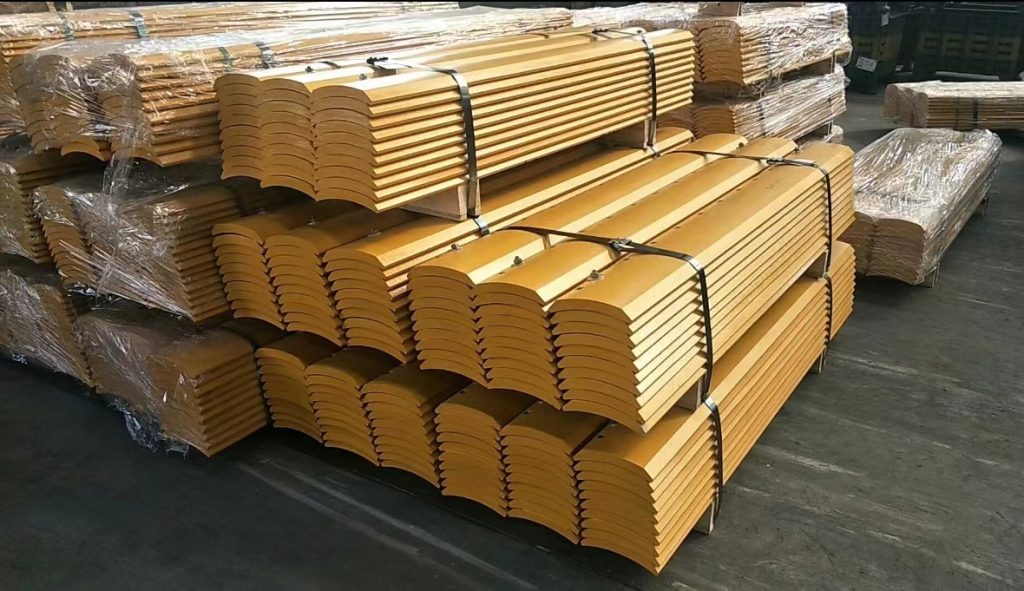
Die Schaufel einer Bodenplaniermaschine ist das empfindlichste Bauteil bei Erdbauarbeiten, da sie direkt mit hohen Belastungen und starkem Verschleiß konfrontiert ist. Daher muss der Produktionsprozess gleichzeitig den Widerspruch zwischen Härte (Verschleißfestigkeit) und Zähigkeit (Schlagfestigkeit) berücksichtigen. Im Folgenden wird der gesamte Produktions- und Herstellungsprozess auf der Grundlage bestehender patentierter Technologie und industrieller Praxis beschrieben:
Produktion und Herstellungsverfahren von Flachbettklingen
Schritt 1: Zutaten und Verhüttung
- Auswahl des Materials: Wählen Sie einen legierten Stahl mit einer spezifischen chemischen Zusammensetzung entsprechend den Leistungsanforderungen des Planierschilds. Gängige Materialien sind 65Mn (Manganstahl), 30MnB (Borstahl) oder proprietärer Stahl mit hoher Verschleißfestigkeit
- Kontrolle der chemischen Zusammensetzung: Um die Lebensdauer der Klinge des Sortierers zu verbessern, wird die moderne Technologie das Verhältnis der Elemente genau kontrollieren. Eine Formel für eine besonders langlebige Schärfklinge enthält beispielsweise: C (Kohlenstoff) 0,25-0,27%, um die Härte zu gewährleisten, Mn (Mangan) 0,8-1%, um die Zähigkeit zu erhöhen, und die Zugabe von verschleißfesten Elementen wie W (Wolfram) 1,5-2% und Si-B-C-N nanokristallinen amorphen Partikeln
- Schmelzen und Raffinieren: Das Schmelzen erfolgt in einem Elektroofen, und schädliche Gase und Verunreinigungen im geschmolzenen Stahl werden durch Entschwefelung, Entphosphorung und Vakuumentgasung entfernt, um die Reinheit und Dichte des Stahls zu verbessern.
Schritt 2: Formgebung
- Gießen oder Walzen:
- Gießverfahren: Gießen Sie geschmolzenen Stahl in eine Druckgussform und lassen Sie ihn langsam unter Druck abkühlen, um ihn zu formen. Diese Methode kann die Materialstruktur dicht machen und verhindert die Bildung von Lockerheit und Blasen.
- Profilstahl-Walzverfahren: Bei bestimmten Formen (z. B. gebogenen Blechen) werden die Krümmung und die Nut der Klinge direkt aus dem Profil gewalzt, was den anschließenden komplizierten Hobelvorgang ersparen und die Kosten senken kann.
- Stanzen: Wenn das Material noch nicht vollständig auf Raumtemperatur abgekühlt ist (heißer Zustand), verwenden Sie eine Heißprägevorrichtung, um das Loch für die Klingenbefestigung in einem Arbeitsgang zu stanzen. Heißes Stanzen kann im Vergleich zum kalten Stanzen innere Spannungen reduzieren und Rissbildung verhindern.
Schritt 3: Wärmebehandlung
Die Wärmebehandlung ist der wichtigste Prozess, der die Leistung der Schaufeln bestimmt, wobei hauptsächlich die folgenden Techniken zum Einsatz kommen:
- Prozessplan A: Gesamtabschrecken+Warmpressen Umformen
- Zweck: Lösung des Problems der "sichelförmigen" Biegeverformung, die durch die asymmetrische Struktur der Blätter verursacht wird.
- Prozess: Erhitzen Sie die Klinge auf 800~820 ℃ und legen Sie sie schnell in eine speziell entwickelte Abschreckungsform. Wenden Sie einen Druck von 200-400 Tonnen durch eine Druckmaschine, und injizieren Abschrecken Lösung bei 20-60 ℃ für schnelle Abkühlung während der Komprimierung. Diese "Pressen und Abschrecken" Methode kann zwangsweise korrigieren Verformung bei gleichzeitiger Erhöhung der Härte.
- Prozessplan B: Vorverformte Mittelfrequenzabschreckung
- Zweck: Nutzung der thermischen Spannung, um der durch das Abschrecken verursachten Verformung entgegenzuwirken.
- Verfahren: Zunächst wird die gegenüberliegende Kante der Klinge kontinuierlich erwärmt und abgekühlt, um eine Vorverformung zu erreichen, und dann wird die Oberfläche der Arbeitskante abgeschreckt.
- Prozessplan C: Hochverschleißfestes Injektionsinfiltrationsverfahren
- Verfahren: Die Schaufel wird in einen Vakuumofen gelegt, das Wolframtarget wird mit Hochenergie-Impulsstrom beschossen, so dass Wolframionen in die Oberfläche der Schaufel eindringen können (Ionenimplantation), und dann werden Aufkohlung und Abschreckung durchgeführt. Dadurch kann sich auf der Oberfläche eine extrem harte Wolframkarbidschicht mit einer Oberflächenhärte von HRC 56-60 bilden.
Schritt 4: Anlassen
- Verfahren: Nach dem Abschrecken weist die Klinge eine erhebliche Sprödigkeit auf. Die Klinge muss in einem Anlassofen platziert werden, erhitzt auf 280-430 ℃, gehalten für 90-120 Minuten, und dann für Luftkühlung herausgenommen.
- Funktion: Beseitigung von Abschreckspannungen, Anpassung von Härte und Zähigkeit und Vermeidung von Sprödbruch der Klinge während des Betriebs.
Schritt 5: Präzisionsbearbeitung und Prüfung
- Oberflächenbehandlung: Die Arbeitsfläche der Klinge wird poliert, um die durch die Wärmebehandlung entstandene Oxidschicht zu entfernen.
- Qualitätsprüfung:
- Härteprüfung: Prüfen Sie, ob die Oberflächenhärte der Klinge den Konstruktionsanforderungen entspricht (in der Regel zwischen HRC 40-55 oder noch höher).
- Ultraschallprüfung: Prüfung auf das Vorhandensein von Mikrorissen oder Poren im Inneren.
- Prüfung der Abmessungen: Prüfen Sie mit Messwerkzeugen die Geradheit der Klinge und die Lagegenauigkeit der Montagebohrung.
Schritt 6: Oberflächenkennzeichnung und Verpackung
- Kennzeichnung: Drucken Sie Spezifikationen, Werkstoffe, Chargennummern und andere Informationen auf die Nicht-Arbeitsfläche der Klinge.
- Rostschutz und Lagerung: Rostschutzöl auftragen, verpacken und für den Verkauf lagern.
Zusammenfassung
Die Herstellung von Schaufeln für Grader ist eine Kombination aus Werkstoffkunde und Präzisionsbearbeitung. Bei der modernen Schaufelproduktion geht es nicht mehr nur um "Schmieden+Schleifen", sondern um "Feinabstimmung der Komponenten+thermomechanische Kopplungsbehandlung" (wie z. B. Gesamtabschreckung und Druckumformung oder Ionenimplantation), um die Lebensdauer der Schaufeln unter rauen Arbeitsbedingungen zu maximieren.
Wenden Sie sich an unseren Vertriebsingenieur Herrn Li Chao für eine Beratung. Unsere Produkte werden für andere Gradermodelle wie Caterpillar, Komatsu, Mitsubishi Heavy Industries, XCMG und Sany Heavy Industries verwendet. Wir können auch Nicht-Standard-Größe Grader Klingen für Sie anpassen