
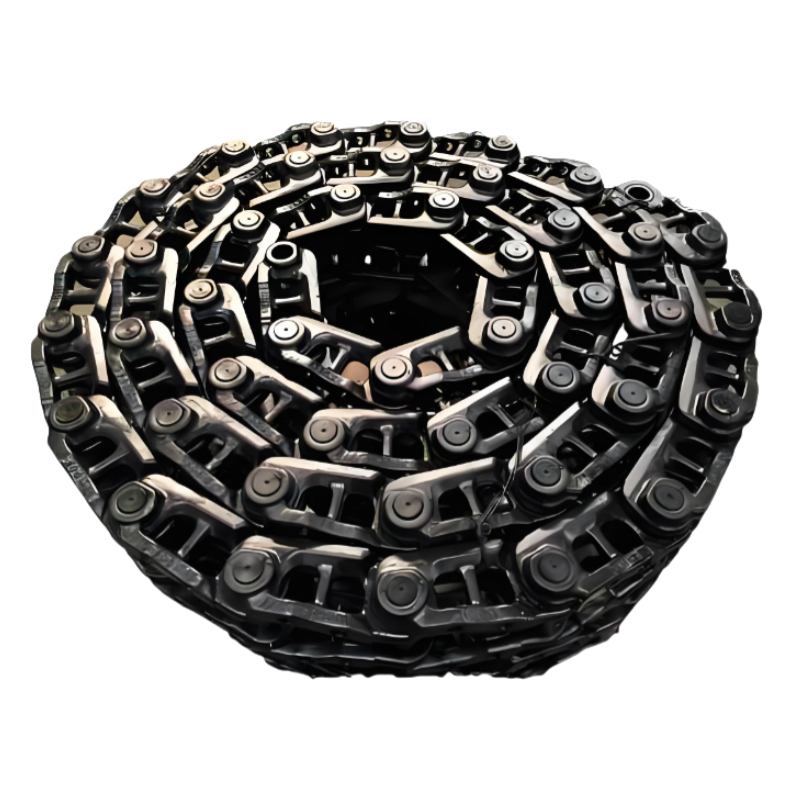
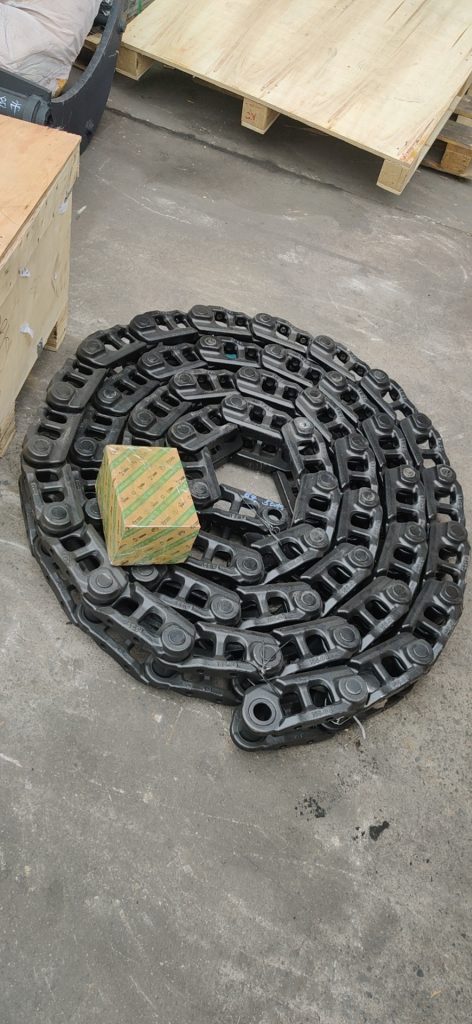
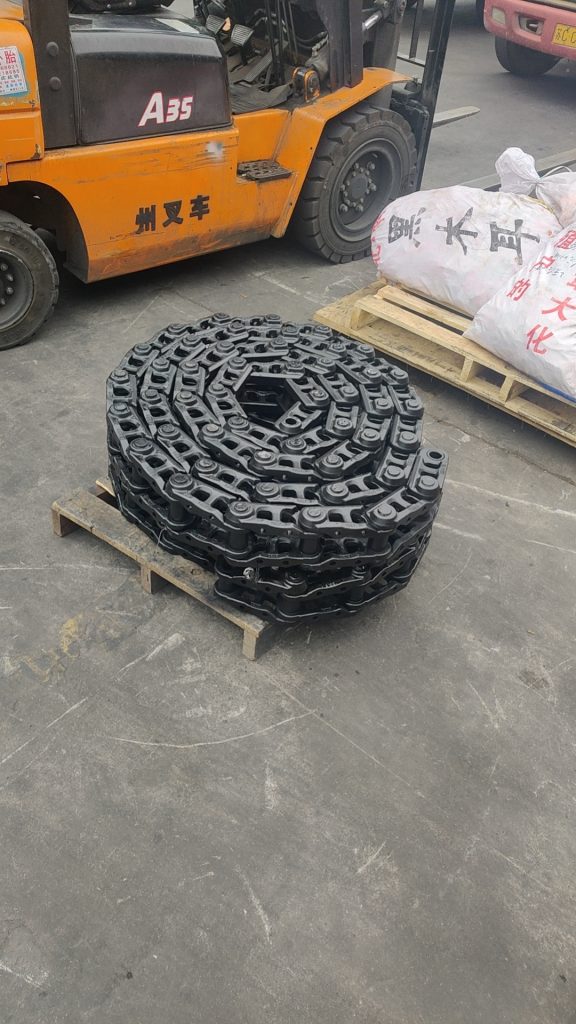
La cadena de orugas (comúnmente conocida como cadenas de orugas) es el "núcleo del sistema de orugas" para maquinaria de ingeniería sobre orugas, como pavimentadoras de asfalto y fresadoras de carreteras, y soporta todo el peso de la máquina e importantes fuerzas de impacto durante su funcionamiento. Su proceso de producción integra tecnologías clave como la forja de precisión, el mecanizado CNC, el refuerzo del tratamiento térmico y el montaje automatizado. A continuación se presenta un desglose detallado del proceso de producción basado en modernas técnicas de fabricación:
Paso 1: Preparación y corte de la materia prima
La fabricación de eslabones ferroviarios comienza con una rigurosa selección de las materias primas. Los fabricantes suelen elegir como materia prima aceros aleados de alta resistencia, como los de las series 35MnBM y CrNiMo, que tienen una excelente templabilidad y tenacidad al impacto, y pueden cumplir los requisitos de resistencia al desgaste y a la fatiga de las vías en condiciones de trabajo duras.
- Fundición y laminación: La fundición se lleva a cabo mediante horno eléctrico o convertidor, y a continuación se somete a un tratamiento de refinado LF y desgasificación al vacío VD para eliminar los gases nocivos y las inclusiones no metálicas del acero, garantizando la pureza de la estructura interna del acero.
- Corte: Cortar el acero redondo o cuadrado laminado en caliente en secciones según el volumen calculado, y utilizarlas como tochos para segmentos individuales de raíles de cadena. Las líneas de producción modernas suelen utilizar cizallas automáticas para garantizar la precisión del corte y la uniformidad del peso.
Paso 2: Calentamiento y forja de precisión
La forja es un proceso clave que determina la estructura interna y el contorno externo de la unión del carril de la cadena. Para obtener líneas de flujo de metal densas, se suelen utilizar prensas de forja en caliente para la forja automatizada.
- Calentamiento: El tocho se calienta rápidamente a 1100-1250 ℃ mediante un horno de calentamiento por inducción de frecuencia intermedia, equipado con un sistema de clasificación de control de temperatura para eliminar automáticamente los tochos con temperatura no calificada, asegurando una temperatura de forja precisa.
- Corte y conformado: El tocho calentado se somete en secuencia a los procesos de aplanado, preforja y forja final. Una prensa de gran tamaño (como una prensa de forja en caliente de 3150 toneladas) aplica una enorme presión para hacer que el metal fluya y se forme en la cavidad del molde, formando el contorno básico de la unión del raíl de cadena.
- Corte de precisión (corte de bordes y punzonado): La forja formada tiene rebabas y piel continua. Utiliza moldes compuestos para el corte de bordes y el punzonado, y elimina el exceso de materiales de desecho. La tecnología avanzada adopta un molde compuesto de doble estación de corte general y corte de precisión, que puede controlar el desplazamiento dentro de 0,3 mm y mejorar significativamente la eficiencia de la producción.
Fase 3: Proceso de tratamiento térmico
El tratamiento térmico es el eslabón central que determina la resistencia al desgaste y la vida útil de las cadenas de orugas. Para conseguir las propiedades de dureza externa y tenacidad interna, los procesos modernos suelen utilizar métodos como el templado con calor residual o el revenido global+reforzamiento local.
- Temple y revenido completos: Calentar el forjado y templarlo (temple en agua o temple en aceite) para obtener una estructura martensítica, seguido de un revenido a alta temperatura para alcanzar una dureza global de HRC 25-40 y garantizar la tenacidad del núcleo.
- Endurecimiento localizado: La superficie de apoyo de la articulación del raíl de la cadena (en contacto con la rueda de apoyo) es la zona más desgastada. Tras el tratamiento térmico general, es necesario someter la zona a un temple por inducción de frecuencia media o alta para formar una capa endurecida con una profundidad de 5-15 mm y una dureza de HRC 45-55, lo que mejora enormemente la resistencia al desgaste.
- Alivio de tensiones: En las zonas sometidas a grandes tensiones, como los agujeros de los pasadores y los agujeros de las camisas, se requiere un tratamiento local de revenido para controlar la dureza por debajo de HRC 40 y evitar el "fallo de bloqueo" (fractura) debido a la dureza.
Paso 4: Mecanizado de precisión
Tras el tratamiento térmico, la unión de los raíles de la cadena sufrirá una ligera deformación y requiere un mecanizado de precisión para garantizar la exactitud del montaje.
- Mecanizado plano: fresado de la superficie de apoyo de la junta del carril de cadena y de la superficie de instalación de la placa del carril para garantizar que la planitud cumple los requisitos.
- Tratamiento de orificios: Procesamiento de los orificios de los pasadores y los orificios de las camisas. El requisito de coaxialidad para estos dos orificios es extremadamente alto, normalmente controlado dentro de 0,05 mm, para garantizar la flexibilidad rotacional y la vida útil del eje del pasador y el casquillo después de ser prensados.
- Taladrado: Taladrado de los orificios de los pernos para la fijación de las placas de oruga y mecanizado de las superficies de ajuste de las tuercas.
Paso 5: Fabricación del eje del pasador y del revestimiento
La parte articulada de la cadena de oruga está compuesta por un eje pasador y un casquillo, que también requieren una dureza y una resistencia al desgaste extremadamente altas.
- Fabricación: Los ejes y casquillos suelen estar fabricados en acero aleado al carbono medio o acero de cementación.
- Tratamiento térmico: Suelen tratarse con carburación superficial o endurecimiento global, con una dureza superficial extremadamente alta (hasta HRC 58-62), y el núcleo mantiene la tenacidad para resistir la flexión y el impacto.
- Tratamiento de la superficie: En el caso de las orugas selladas y lubricadas (SALT), se aplica un tratamiento especial a la superficie del eje del bulón y del revestimiento, y se rellena con grasa lubricante para prolongar la vida útil.
Paso 6: Montaje y preapriete
Combine las juntas de carril de cadena procesadas, los ejes de pasador y los bujes juntos.
- Ajuste a presión: Utilice una máquina de ajuste a presión específica para presionar la camisa en el orificio de la camisa de la unión del raíl de la cadena y presione el eje del pasador en el orificio del pasador de otra unión del raíl de la cadena. Normalmente, se utiliza el ajuste de interferencia para garantizar que la conexión sea firme y no quede suelta.
- Sellado: En las pistas de lubricación selladas, es necesario instalar un sistema de sellado de dos etapas (como las juntas de mariposa) en la conexión para evitar la entrada y fuga de barro y grasa, lo que es crucial para los equipos que funcionan en entornos con barro y grava.
Paso 7: Pintura e inspección final
- Pintura: La cadena de orugas ensamblada debe someterse a un proceso de eliminación de óxido y limpieza antes de entrar en la línea de inmersión. Para evitar la corrosión, suele realizarse un tratamiento general de pintura por inmersión o pulverización. Las fábricas modernas adoptan sistemas ecológicos de recogida de gases de escape y combustión catalítica para garantizar una producción limpia。
- Inspección final:
- Inspección dimensional: Compruebe el paso, la rectitud y la holgura lateral de la cadena.
- Dureza y pruebas: Realice pruebas de partículas magnéticas en las zonas de tensión clave para comprobar si hay grietas superficiales.
- Pruebas de rendimiento: Realizar pruebas de carga estática (con una capacidad portante no inferior a 85kN) y pruebas de fatiga (con un mínimo de 5 millones de ciclos).
Una cadena de orugas de alta calidad requiere un control total del proceso, desde la modificación del material, la forja de precisión, el tratamiento térmico diferencial hasta el montaje de alta precisión. La industria actual evoluciona hacia la automatización y la inteligencia, con un gran número de robots industriales y tecnología de visión 3D que se utilizan para mejorar la eficiencia de la producción al tiempo que garantizan la consistencia y fiabilidad del producto
WhatsAPP+8613635559000
WhatsAPP+8613635559000
WhatsAPP+8613635559000