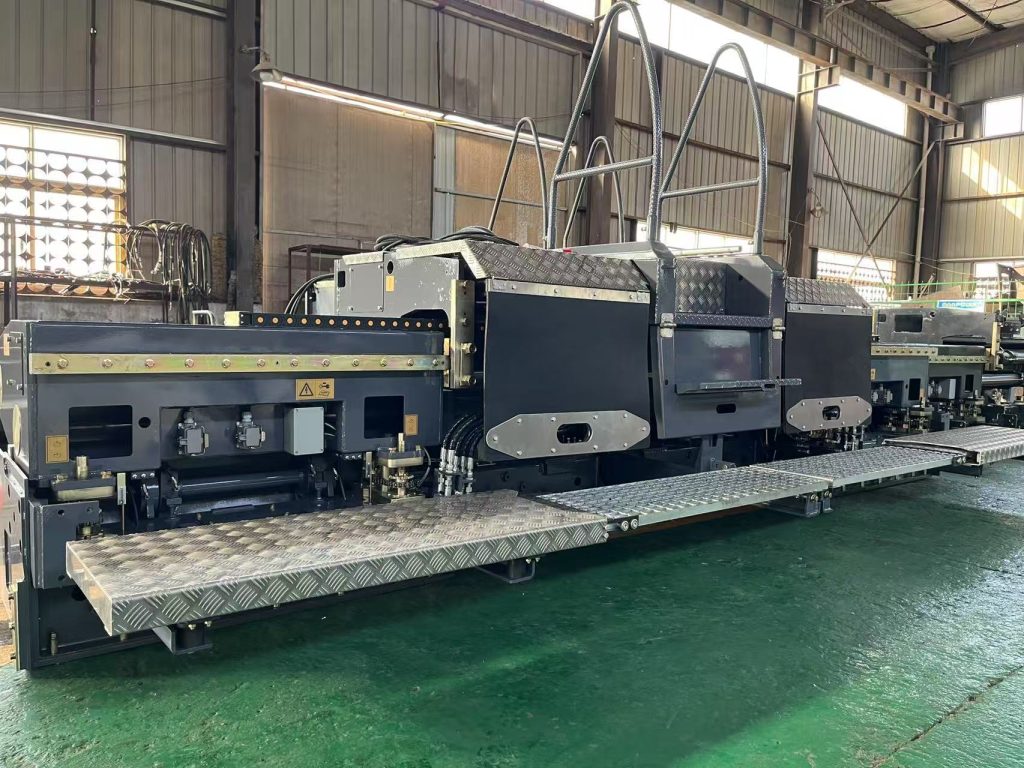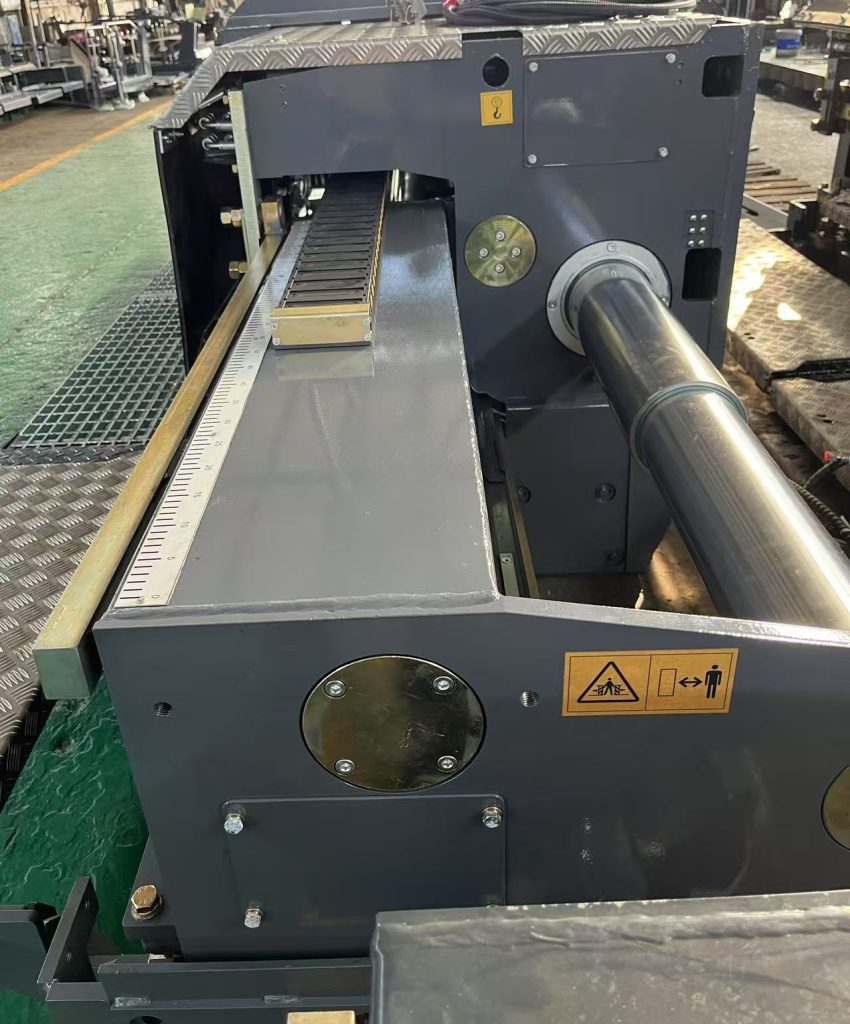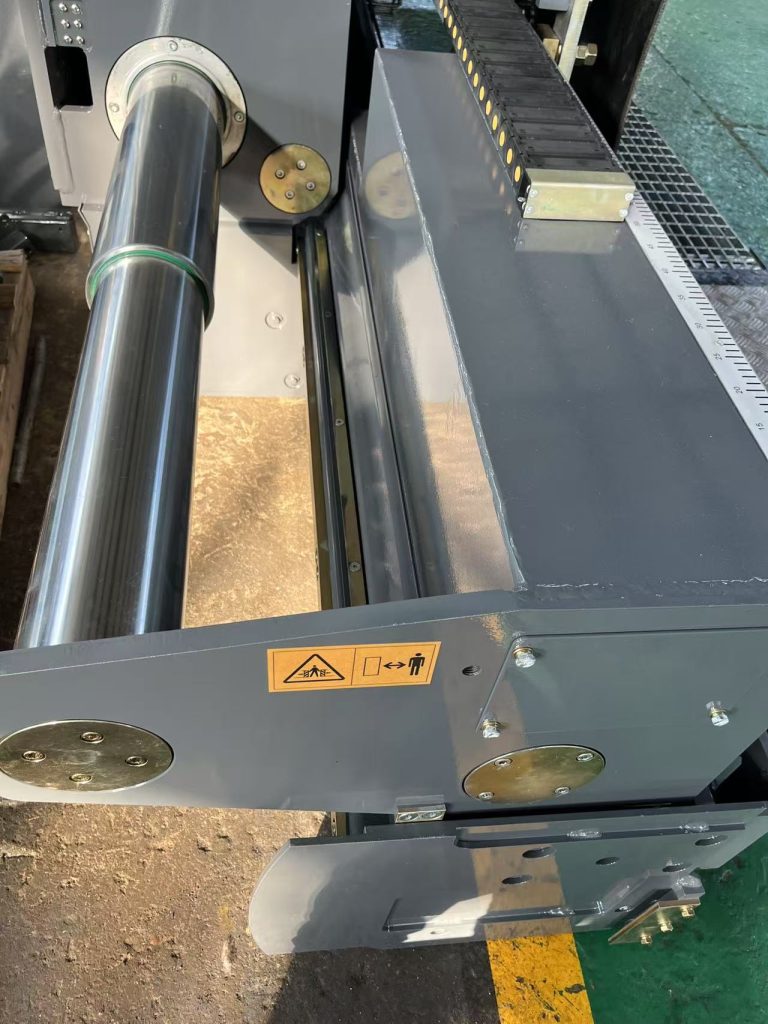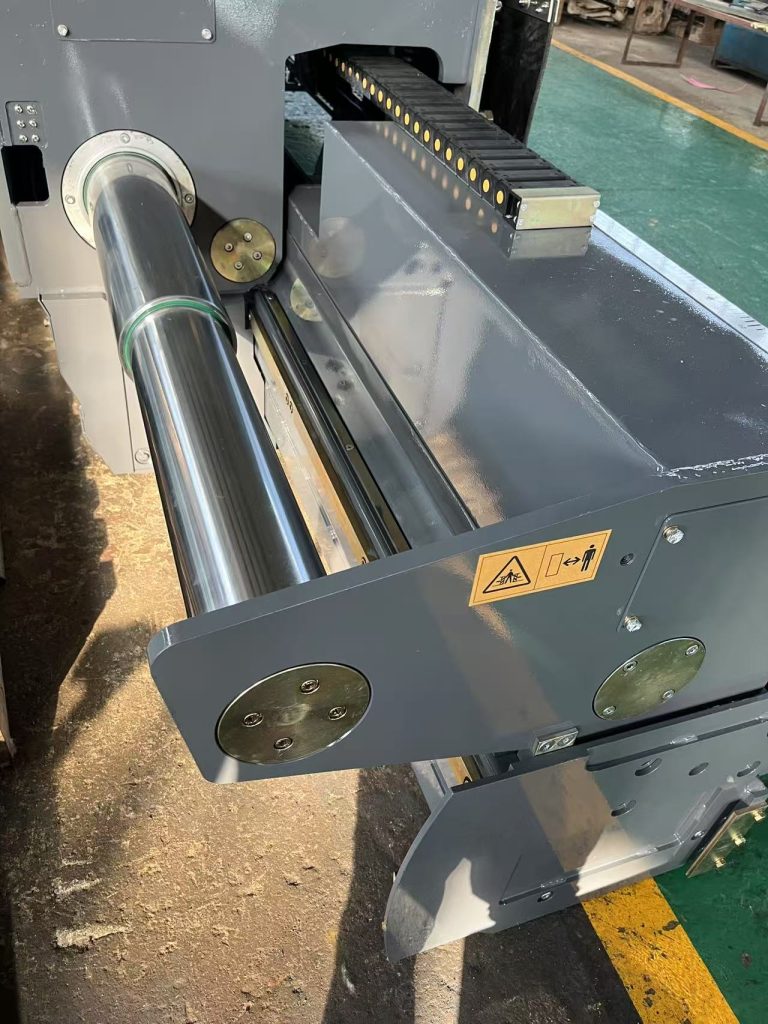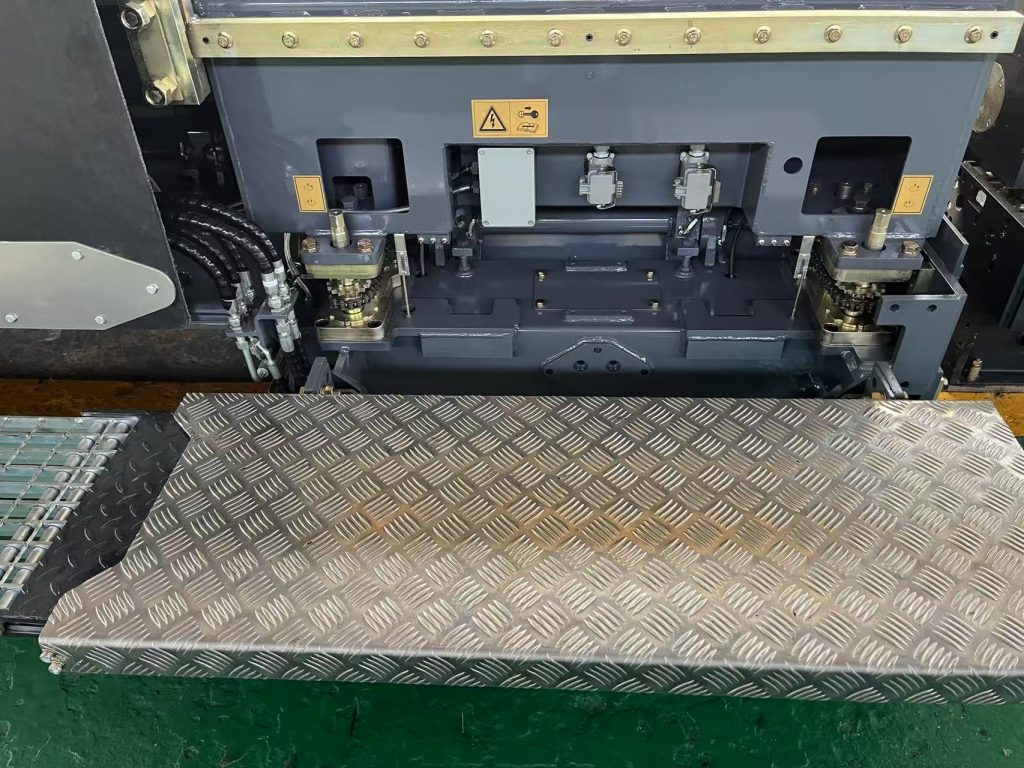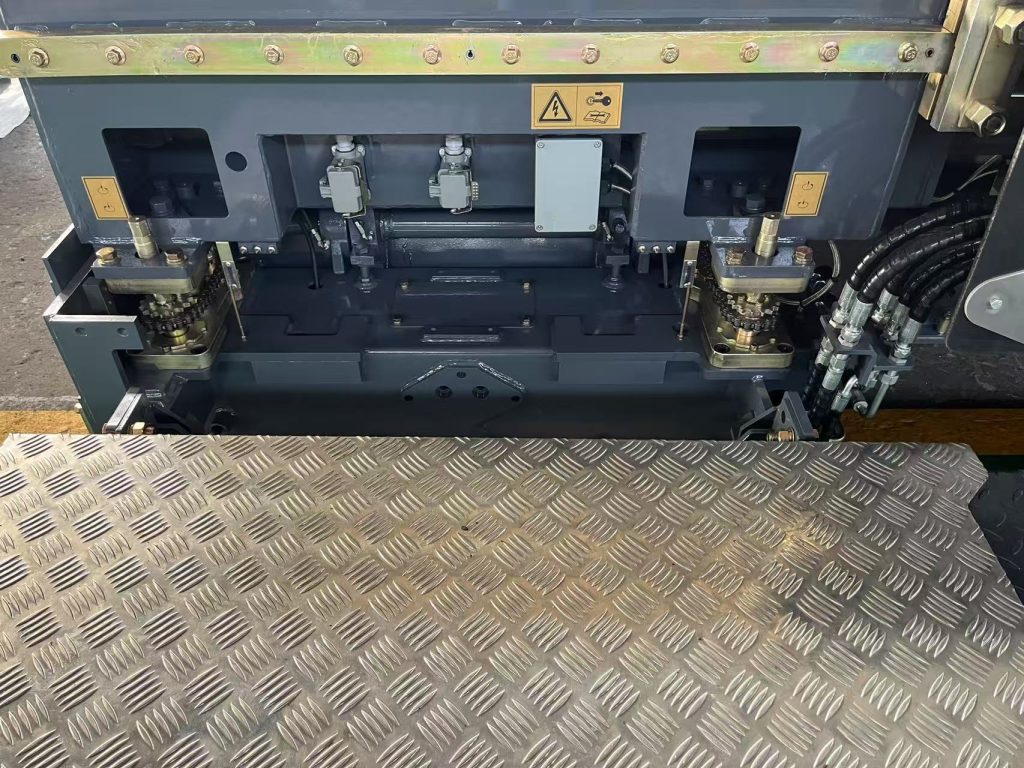
The correct adjustment of the asphalt paver screed plate requires coordinated operation from multiple aspects such as preheating, elevation angle, arch degree, amplitude, and automatic leveling system to ensure uniform paving thickness, consistent compactness, and smooth surface. The following are the key adjustment steps and key points
1、 screed plate preheating
Before paving, the screed plate must be fully preheated to prevent asphalt adhesion from causing “pitting” or material pulling phenomenon:
Heating temperature: It should be preheated to above 100 ℃, and even in high temperature weather, it should not be less than 20 minutes.
Auxiliary measures: A small amount of diesel can be sprayed on the bottom plate or special isolation agents (such as Fojiaoke Tiannuo products) can be used to reduce sticking.
2、 Initial elevation angle adjustment
The elevation angle directly affects the paving thickness and initial compactness of the mixture:
Range of elevation angle: usually set at 20 ° to 40 °, the thicker the paving layer, the larger the initial elevation angle should be appropriately increased.
Adjustment method:
The mechanical screed plate is adjusted by a central spiral adjustment device;
Hydraulic type is achieved by operating the arch hydraulic cylinder through the control panel and locking the position with the brake cylinder.
Expansion section elevation angle: It should be 2-3mm larger than the basic section to compensate for the insufficient compactness caused by the lack of spiral feeding.
3、 Arch adjustment
Ensure that the transverse slope of the road meets the design requirements and avoid water accumulation:
Adjustment mechanism: Adjust the left and right opening angles through the arch spiral adjustment device in the middle of the screed plate.
Verification method: The ruler can directly read the arch value (unit: mm) or the percentage of cross slope. After adjustment, it needs to be verified and rechecked.
4、 Vibration and vibration system settings
The pre compaction effect is determined by the amplitude and frequency of the vibrator:
Adjustable amplitude range of front vibrator: 0, 3, 6, 9, 12mm;
Adjustable amplitude range of the rear vibrator: 3, 5, 7, 9mm;
The default value at the factory is generally 6mm for the front and 5mm for the back, which can be adjusted according to the material type and paving thickness.
Adjustment method: Rotate the eccentric sleeve to align the scale numbers with the “H” line, and then tighten the bolt.
Bottom dead center adjustment: The bottom edge of the rear vibrating hammer should be 0.3-0.5mm lower than the bottom plate of the screed plate to ensure compaction and fit.
5、 Automatic leveling system calibration
The core of achieving high-precision paving:
Using a longitudinal slope sensor to sense changes in the reference beam, the controller drives the solenoid valve to adjust the height of the leveling cylinder and dynamically correct the elevation angle.
Sensor maintenance: It is recommended to calibrate the ultrasonic thickness detector every 4 hours to avoid drift errors.
6、 Width expansion and elongation adjustment
Telescopic screed plate: width adjustment is achieved through hydraulic cylinder pushing, and both sides need to be synchronized during operation.
Extended section installation: Pay attention to aligning the front and rear ends to avoid misalignment and affecting flatness; The severely worn extension section needs to be compensated for height through an eccentric mechanism.
China Ma’anshan Datai Machinery Technology Co., Ltd. specializes in the production and sale of VOGELE asphalt paver ironing plates AB600-3TV (2310246) and AB500-3TV (2310096) maintenance kits